Casey Griffin · 3 November 2026
Safety Reviews Prompt Midwest Forges to Pilot AI Sensors While Equipment Orders Hit New Peaks
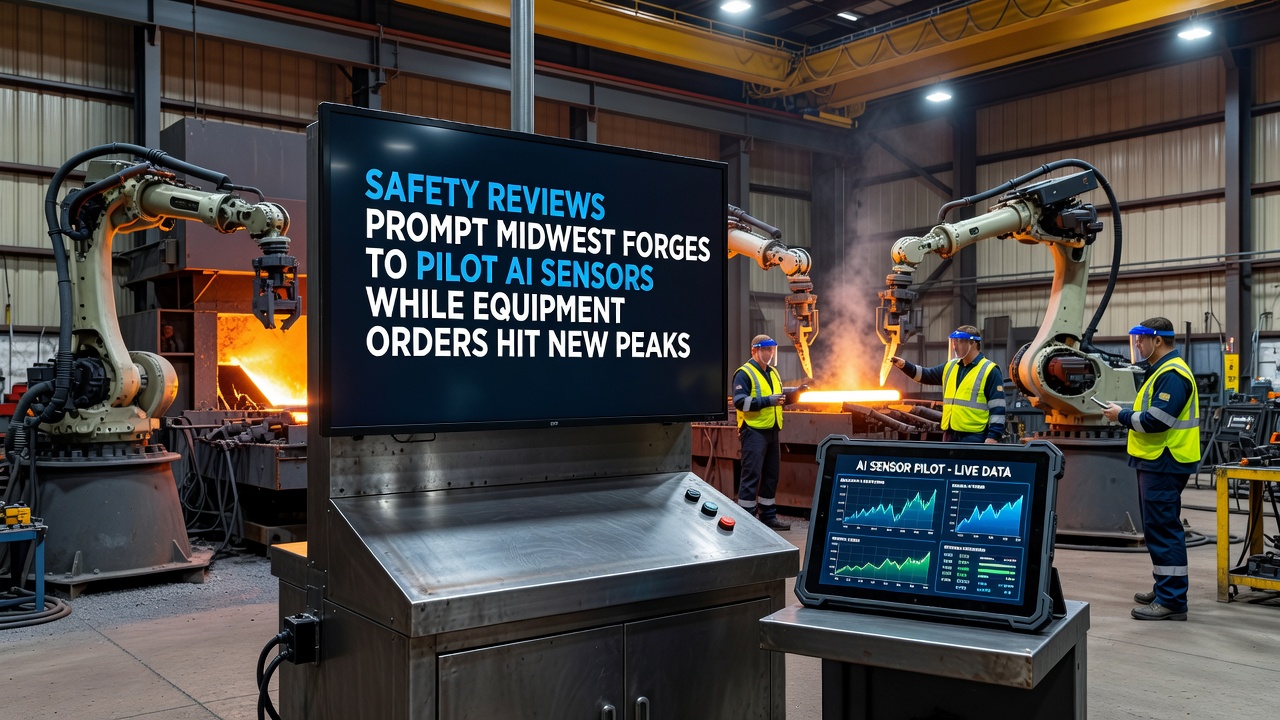
Recent safety reviews across Midwest forging operations have driven several facilities to launch pilot programs for AI-powered sensors, and these initiatives coincide with equipment orders reaching record highs in late 2026. Data from industry tracking services show that orders for forging presses, hammers, and related machinery climbed sharply through the third quarter, with November 2026 figures revealing sustained momentum in both domestic and export markets. Observers note that the dual developments reflect how regulatory scrutiny and production demands intersect in the sector.
Safety Reviews Spark Technological Shifts
Safety assessments conducted at multiple plants in Ohio, Indiana, and Illinois identified recurring hazards involving high-temperature operations and heavy material handling, which prompted managers to test sensor arrays that detect anomalies in real time. These systems combine thermal imaging with vibration monitoring to flag potential equipment stress before failures occur, and researchers at university engineering programs have documented similar approaches yielding measurable reductions in incident rates during controlled trials. Facilities participating in the pilots report that the sensors integrate with existing control systems without requiring complete overhauls, which keeps implementation timelines manageable amid ongoing production schedules.
Equipment suppliers have responded to the uptick in demand by expanding lead times and inventory buffers, yet delivery backlogs have lengthened for certain high-capacity presses. Figures released by trade associations indicate that total orders for forging equipment surpassed previous annual peaks by double-digit margins, driven in part by aerospace and automotive component manufacturers seeking to secure capacity ahead of anticipated supply constraints. Those who've studied order patterns note that Midwest buyers account for a significant share of the surge, particularly for units equipped with advanced monitoring capabilities that align with the ongoing safety pilots.
Order Volumes Reach Historic Levels
Industry reports compiled through November 2026 highlight how forging equipment purchases have accelerated despite broader economic uncertainties, and analysts attribute part of the growth to federal infrastructure spending that supports domestic manufacturing. Midwest operations have placed particular emphasis on machinery that supports both higher throughput and enhanced safety protocols, creating overlap between the sensor pilots and new capital investments. Suppliers based in the region and abroad have reported steady inquiries, with some noting that buyers now routinely request AI-ready configurations as standard features rather than optional add-ons.
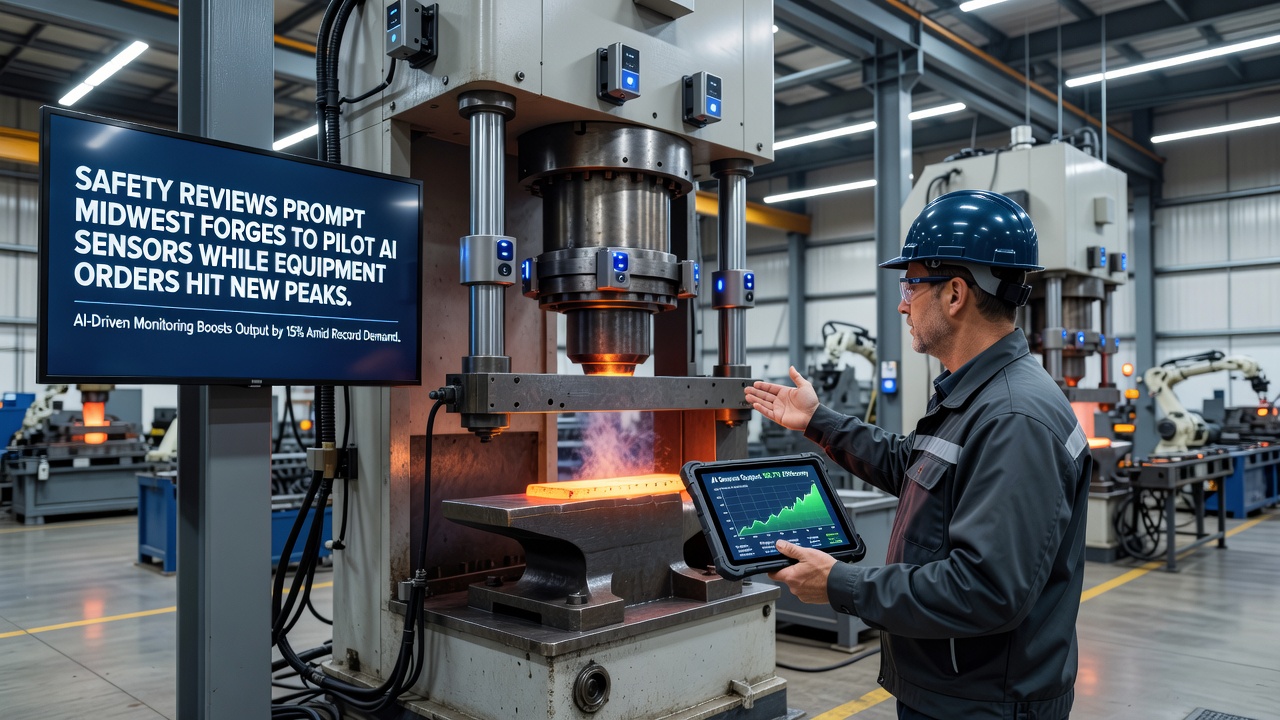
One study from a North American manufacturing research group revealed that facilities adopting sensor technology early often experience smoother transitions when scaling production, while those delaying upgrades face longer adjustment periods once regulations tighten further. Data compiled by the Occupational Safety and Health Administration underscores the emphasis on proactive hazard identification, and similar frameworks from the European Agency for Safety and Health at Work provide comparative benchmarks that some Midwest operators reference during planning sessions. These cross-regional insights help plant managers evaluate which sensor configurations deliver the most reliable performance under demanding forge conditions.
Integration Challenges and Industry Responses
Implementation of the AI sensors requires coordination between engineering teams and external vendors, and several plants have formed internal task forces to oversee the pilots through the remainder of 2026. Technicians receive specialized training on interpreting sensor outputs, which helps them distinguish between routine operational variations and genuine safety concerns. Although initial setup costs vary by facility size, the projects typically phase in monitoring on the most critical presses first before expanding coverage.
Order backlogs have prompted some buyers to explore secondary markets for refurbished equipment that can accept sensor retrofits, yet primary manufacturers continue to report strong forward bookings. Trade data shows that the combination of domestic policy incentives and international demand has kept production lines busy at supplier facilities, with lead times stretching into 2027 for certain models. Those monitoring these trends point out that the Midwest remains a focal point because of its concentration of legacy forges that now seek modernization pathways.
Broader Context for 2026 Developments
November 2026 marks a period when multiple Midwest forges simultaneously advanced their sensor pilots while capital expenditure budgets expanded, and this convergence reflects ongoing adjustments to both safety expectations and market opportunities. Government statistical agencies track these shifts through quarterly surveys that capture employment, output, and investment metrics across primary metals manufacturing. The resulting datasets allow comparisons across states and help identify which regions lead in technology adoption rates.
Academic papers published by engineering departments at Midwestern universities have begun analyzing early pilot results, focusing on metrics such as detection accuracy and maintenance interval extensions. These studies draw on operational logs from participating plants to assess how sensor data influences decision-making on the shop floor. Findings so far indicate consistent patterns in anomaly detection that align with existing safety protocols, although full statistical validation will require additional quarters of data collection.
Conclusion
The intersection of heightened safety reviews and elevated equipment demand continues to shape Midwest forging operations as 2026 draws to a close. Pilot programs for AI sensors proceed alongside record order volumes, supported by data from regulatory bodies and research institutions that inform both technology choices and investment decisions. Industry participants track these developments through established reporting channels, and the patterns observed through November provide a baseline for evaluating future progress in the sector.