Olivia Friedrich · 20 October 2026
Midwest Forges Merge Coal Traditions with AI Sensors to Counter Tariff-Driven Aerospace Delays
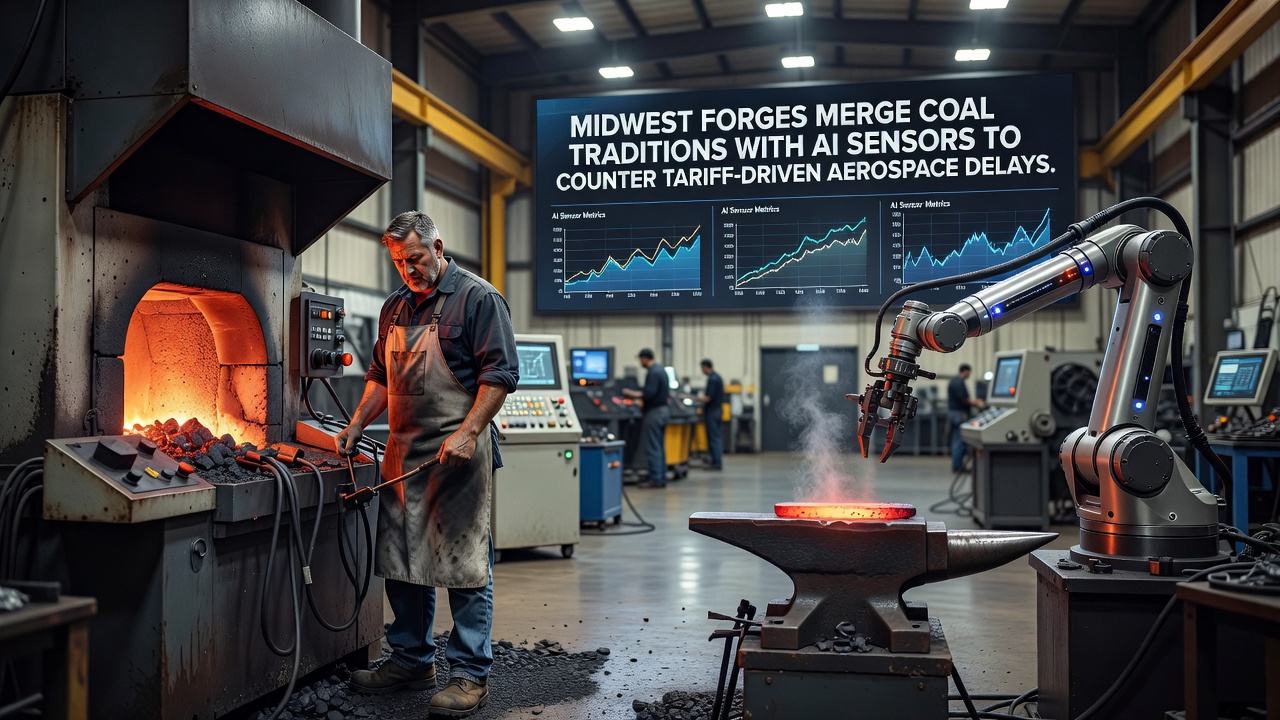
Facilities across the Midwest have started combining longstanding coal-fired forging practices with advanced sensor networks, and this approach addresses delays that tariffs have created in aerospace supply chains since early 2025. Operators in states such as Ohio, Indiana, and Illinois report that these hybrid systems maintain the heat consistency coal provides while adding real-time data adjustments that reduce material waste during production runs.
Traditional Methods Meet Data Integration
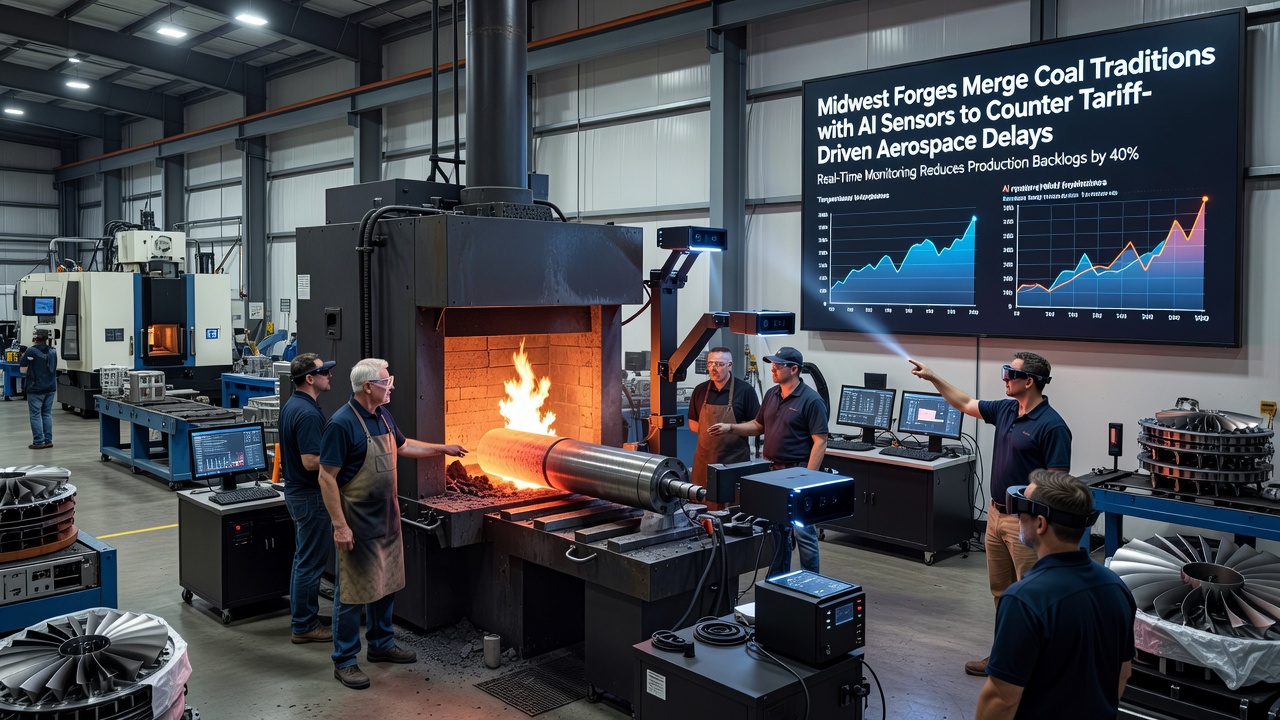
Coal remains central to many Midwest forges because it delivers the high, stable temperatures required for large aerospace components like turbine disks and landing gear forgings, while AI sensors track temperature fluctuations, pressure levels, and cooling rates across each heat cycle. Technicians at plants in the region note that the sensors feed information into control systems that automatically adjust burner settings or conveyor speeds, which helps keep output steady even when raw material shipments slow due to import duties.
One study from Purdue University documented efficiency gains at three facilities that installed sensor arrays in 2024, and the data showed a 12 percent drop in rework rates for titanium alloy parts. Workers continue to monitor furnace conditions manually at key stages, yet the digital layer catches deviations that coal alone can mask during extended shifts.
Tariff Pressures on Aerospace Timelines
Import tariffs on specialty steels and aluminum alloys have extended lead times for aerospace manufacturers, with some orders now taking 18 to 24 weeks instead of the previous 10 to 12 weeks. Midwest forges have responded by increasing domestic capacity through these upgraded lines, and production reports from October 2026 indicate that plants using the combined approach completed 8 percent more aerospace forgings than in the same month the previous year.
According to figures released by the U.S. International Trade Administration, aerospace component imports subject to new duties rose by 22 percent in the first half of 2026, which pushed buyers toward domestic suppliers. Forges that retained coal infrastructure while layering sensor technology avoided the capital cost of full electric conversions, and this strategy allowed quicker scaling when orders surged.
Implementation Across Regional Plants
Companies in the Chicago-Gary industrial corridor began pilot programs in late 2025, and they placed wireless vibration sensors alongside older coal stokers to detect when hammer strikes deviated from optimal force patterns. The systems then cross-reference that information with historical batch records stored in plant databases, which enables operators to maintain consistent grain structures in high-strength alloys without altering coal feed rates.
Plants in Kentucky and Michigan followed similar paths after observing results from the initial sites, and they integrated thermal imaging cameras that link directly to furnace dampers. Data collected during October 2026 runs showed these adjustments cut unplanned downtime by an average of 15 hours per month at participating facilities.
Supply Chain Adjustments and Workforce Roles
Coal suppliers in the Appalachian region have seen steadier contracts as forges commit to hybrid operations, and this stability supports local mining operations that might otherwise face reduced demand. At the same time, workforce training programs at community colleges in Indiana now include modules on interpreting sensor dashboards, which prepares technicians to work alongside the legacy equipment they already understand.
Industry reports from the Canadian Institute for Advanced Manufacturing highlight parallel experiments in Ontario, where similar sensor additions helped offset tariff effects on cross-border aerospace parts. Those findings align with Midwest outcomes and suggest the approach transfers across borders when coal access and skilled labor remain available.
Conclusion
Midwest forging operations continue to refine the balance between coal-based heating and AI-driven oversight, and the resulting output supports aerospace programs facing extended material delays. Production data through late 2026 demonstrates measurable improvements in throughput and consistency, while the underlying infrastructure stays rooted in established regional practices. Further sensor refinements are expected as tariff policies evolve and additional facilities adopt the same layered systems.