Rafael Hoffmann · 22 September 2026
Artificial Intelligence Integration Helps Forge Plants Reduce Downtime and Reach Efficiency Benchmarks
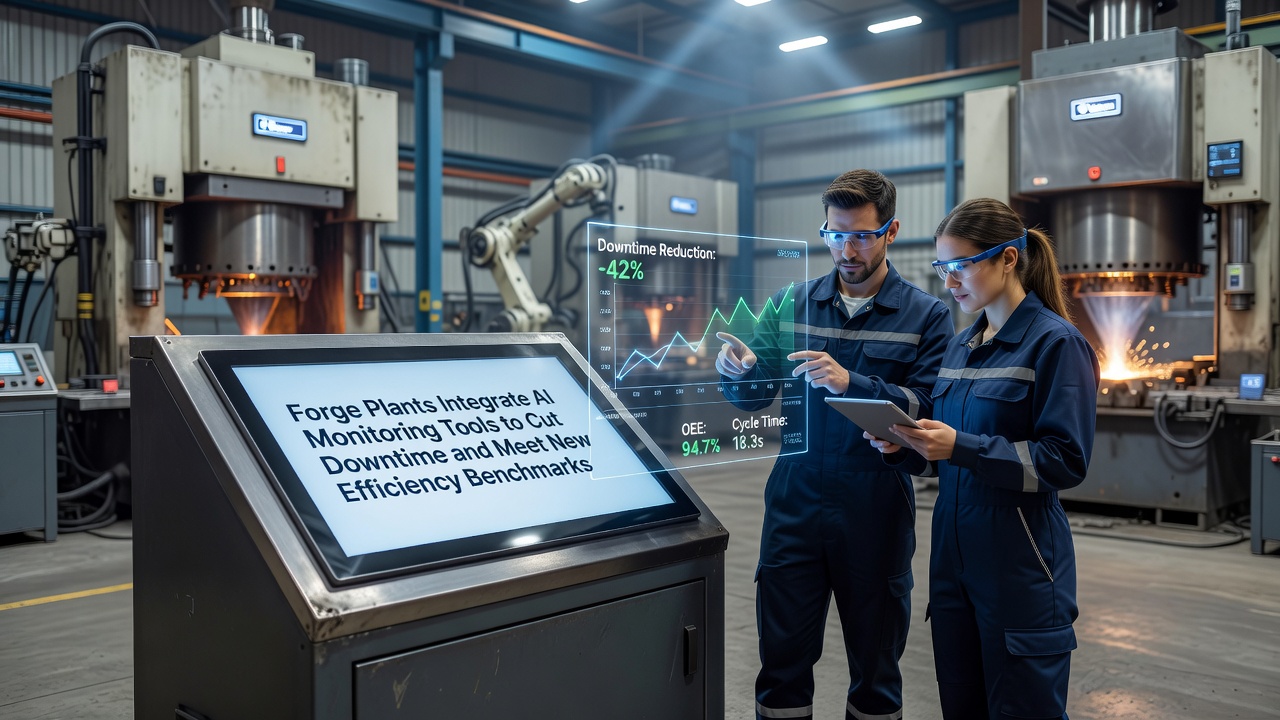
Metal forging facilities across multiple regions began rolling out artificial intelligence monitoring systems in 2025, and by September 2026 operators reported measurable reductions in unplanned equipment stoppages along with progress toward updated performance targets. These tools analyze vibration patterns, temperature fluctuations, and pressure readings from presses and hammers, then flag anomalies before failures occur. Data from industry reports shows that facilities adopting the technology experienced average downtime cuts of 18 to 25 percent within the first year of deployment.
Core Components of the Monitoring Systems
Sensors placed on critical machinery feed continuous streams of information into machine learning models that compare current readings against historical baselines. When deviations exceed set thresholds, the software generates alerts for maintenance teams and sometimes triggers automatic adjustments to operating parameters. Researchers at several technical institutes note that this approach shifts maintenance from scheduled intervals to condition-based interventions, which reduces both over-servicing and unexpected breakdowns. One study published by the National Research Council Canada highlighted how similar sensor networks improved overall equipment effectiveness by 12 percent in heavy manufacturing settings.
Integration with existing plant control systems allows operators to view consolidated dashboards that combine production metrics with predictive maintenance scores. This setup supports faster decision making because staff receive prioritized task lists rather than raw data dumps. According to figures released by the Australian Department of Industry, Science and Resources, plants that combined AI monitoring with workforce training programs reached efficiency benchmarks 30 percent sooner than those relying on sensors alone.
Implementation Patterns Observed in 2026
Facilities in the Midwest United States and parts of Central Europe installed the first wave of these tools during the second half of 2025, then expanded coverage to secondary lines by mid-2026. Early adopters focused on high-impact assets such as hydraulic presses and induction heaters, where downtime carries the highest cost. Observers note that smaller forges often partnered with specialized vendors to avoid large upfront capital outlays, opting instead for subscription-based analytics platforms that scale with sensor count.
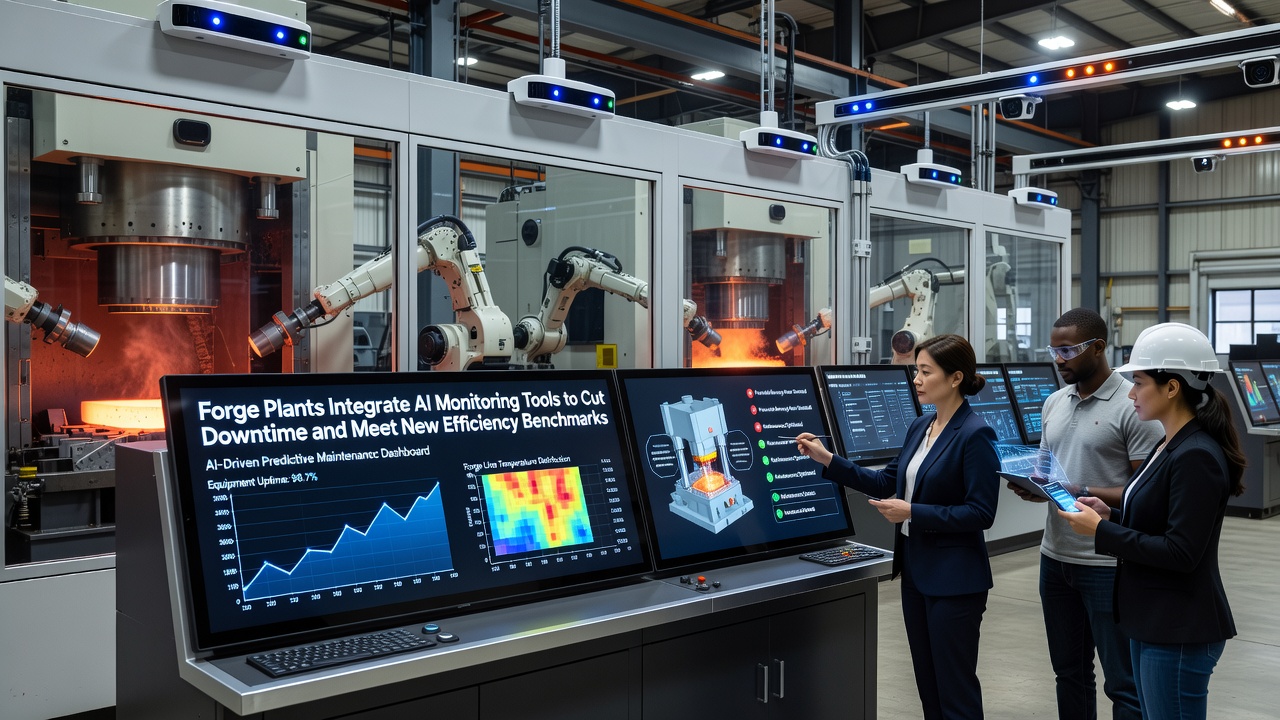
Case examples illustrate the range of outcomes. One mid-sized operation in Ohio reduced press-related stoppages from 47 hours per month to 29 hours after six months of AI monitoring, according to internal logs shared with trade associations. Another plant in Germany reported that energy consumption per forged ton dropped 7 percent because the system optimized heating cycles based on real-time demand forecasts. Those results align with broader trends documented in a joint report from the Fraunhofer Institute and several European manufacturers.
Challenges and Adjustments During Rollout
Integration does not occur without friction. Legacy equipment sometimes requires additional adapters before data can flow into modern analytics platforms, and cybersecurity reviews add weeks to project timelines. Plant managers also describe the need for staff upskilling so technicians can interpret model outputs rather than relying solely on traditional diagnostics. A survey conducted by the Manufacturing Technology Centre in the United Kingdom found that 62 percent of respondents cited data quality as the primary hurdle during initial months, yet most facilities overcame that barrier through iterative sensor calibration.
Regulatory expectations around emissions and energy use have also influenced adoption speed. Facilities seeking to document efficiency gains for compliance reporting find that AI-generated logs provide auditable trails of process adjustments. This capability helps operators demonstrate progress toward benchmarks without manual record keeping.
Measured Outcomes and Future Projections
By September 2026, aggregated data from early installations indicate that predictive interventions prevented an estimated 1,200 hours of downtime across participating sites. Cost savings from avoided repairs and lost production reached several million dollars per large facility, though exact figures vary by product mix and regional energy prices. Industry organizations tracking these deployments expect wider rollout through 2027 as hardware costs decline and model accuracy improves with additional training data.
Conclusion
Forge plants that installed AI monitoring tools achieved documented reductions in downtime while advancing toward efficiency benchmarks set by both internal targets and external standards. The technology combines sensor networks with machine learning to enable condition-based maintenance and real-time process optimization. Continued expansion depends on addressing integration hurdles and expanding workforce capabilities, yet available evidence shows consistent performance gains across different facility sizes and geographic locations.